

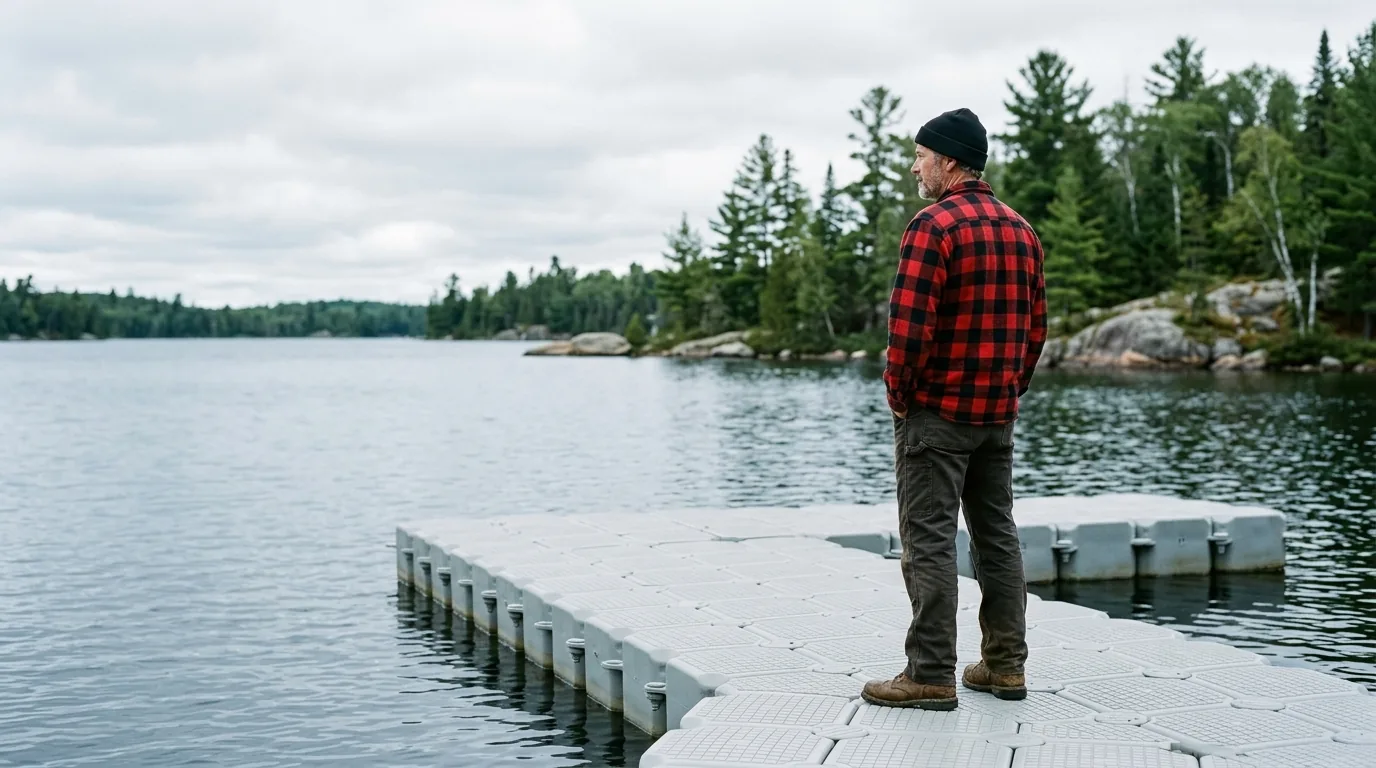

Your dock is in.
The heavy lifting is ours.
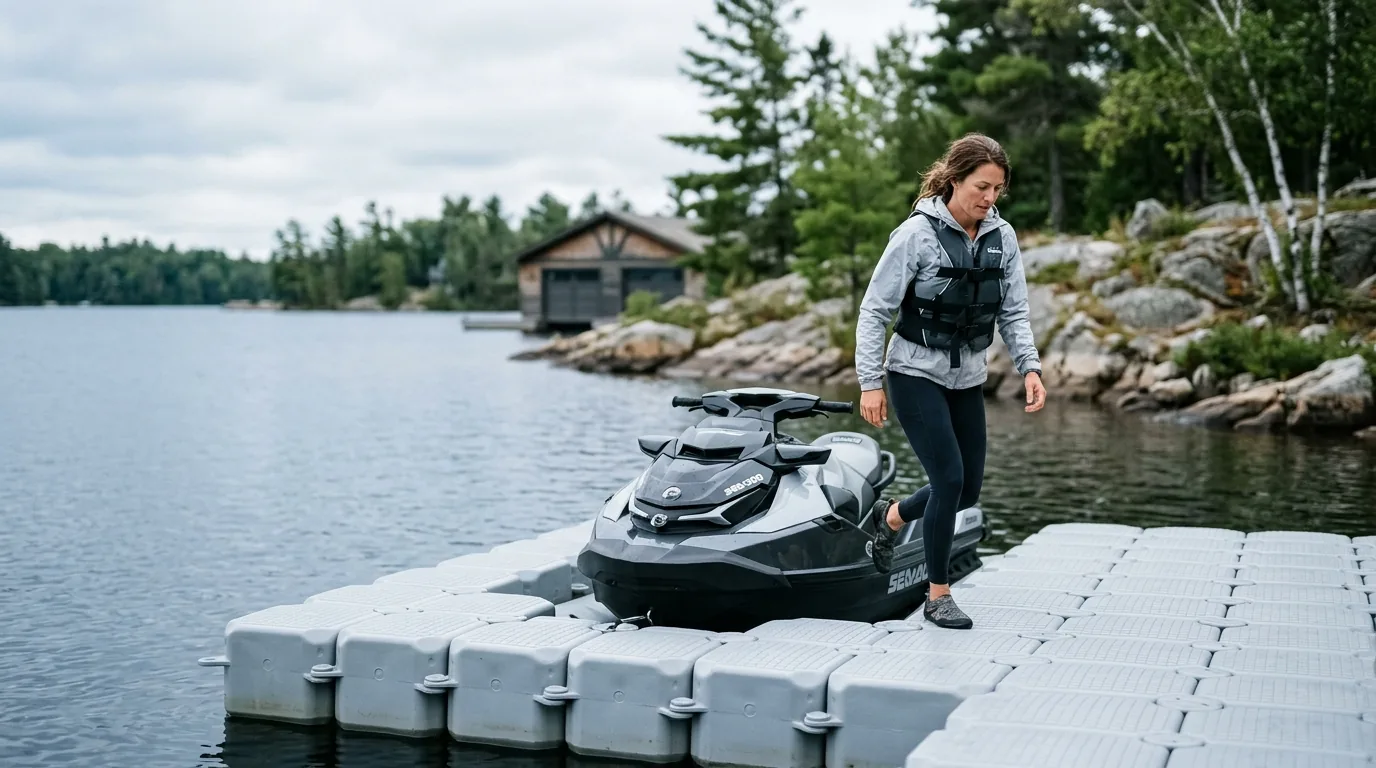
Foam-free HDPE modules, installed turnkey — cottage docks, jet-ski ports, swim platforms and marina walkways. We put it in each spring and take it out each fall.
Pay Less For
The Same Dock.
The dock does not change — only when you order it and how it reaches your water. Ask for the offer when you request the estimate.
Off-Season Sale
Order between November 1 and February 28 and take 15% off the price list. Same dock, same warranty — you are simply not buying it in June.
Pre-Order Next Season
Reserve now with 50% down and take 10% off. The balance is due on delivery, and you hold a priority slot right after ice-out.
Collect It Yourself
Pick the dock up from our warehouse instead of having it delivered and take a further 5% off. Stacks with either offer above.
One System.
Multiple Waterfronts.
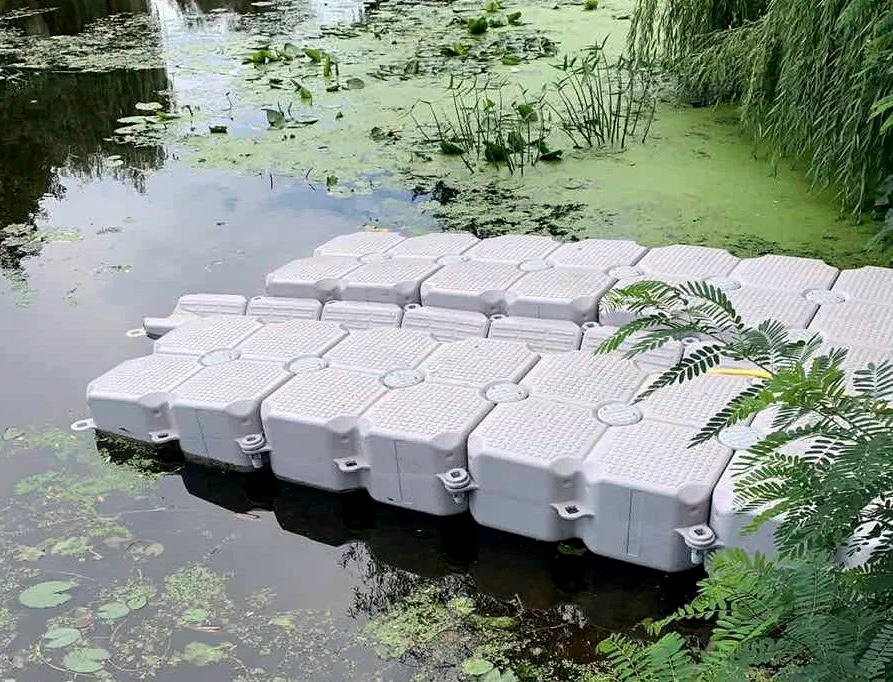
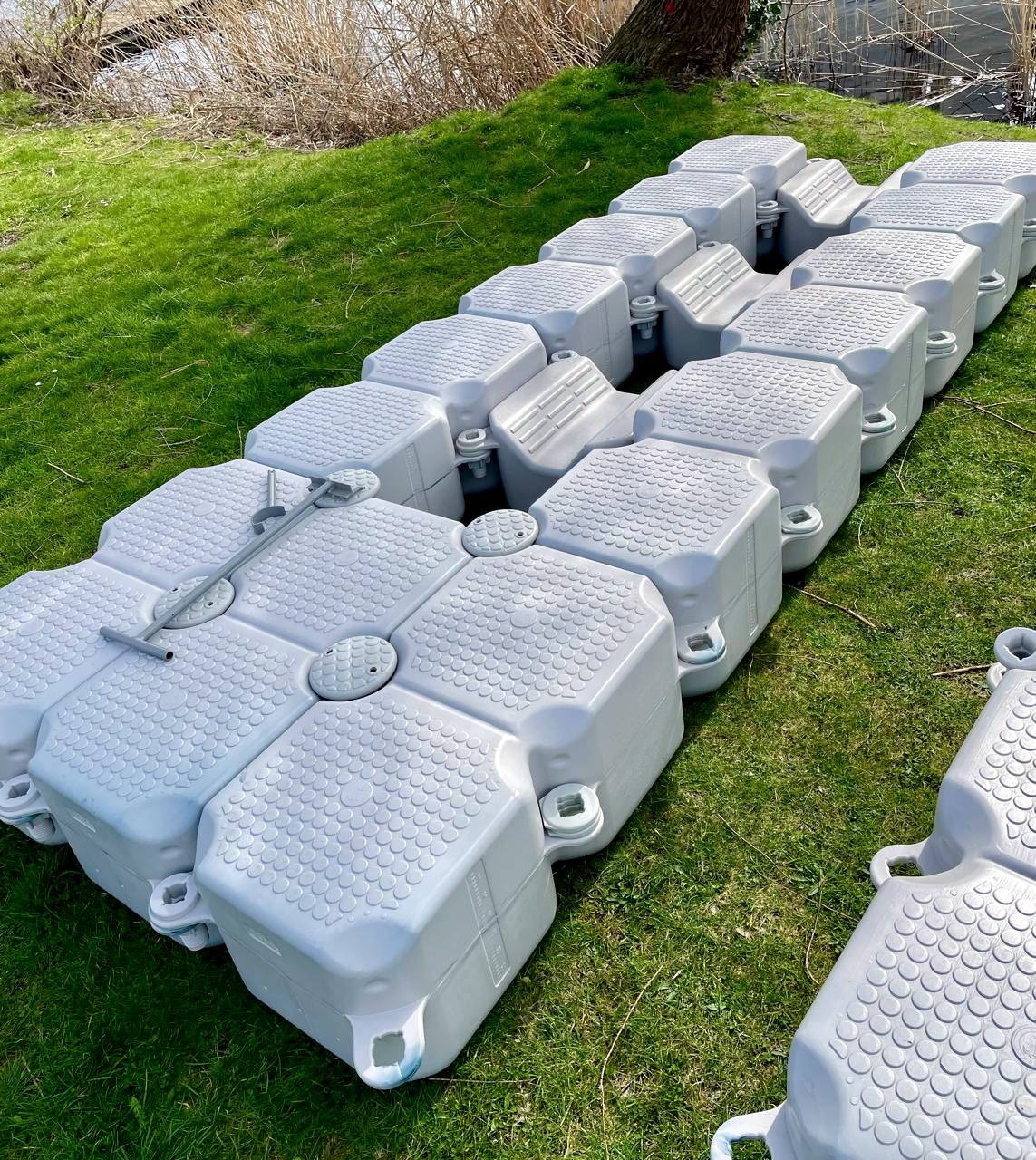
Every configuration below is assembled from the same 20-inch (50 cm) module. Choose a starting point — the layout, dimensions and accessories adapt to the site.
Private Dock
Waterfront access for cottages and lake houses.
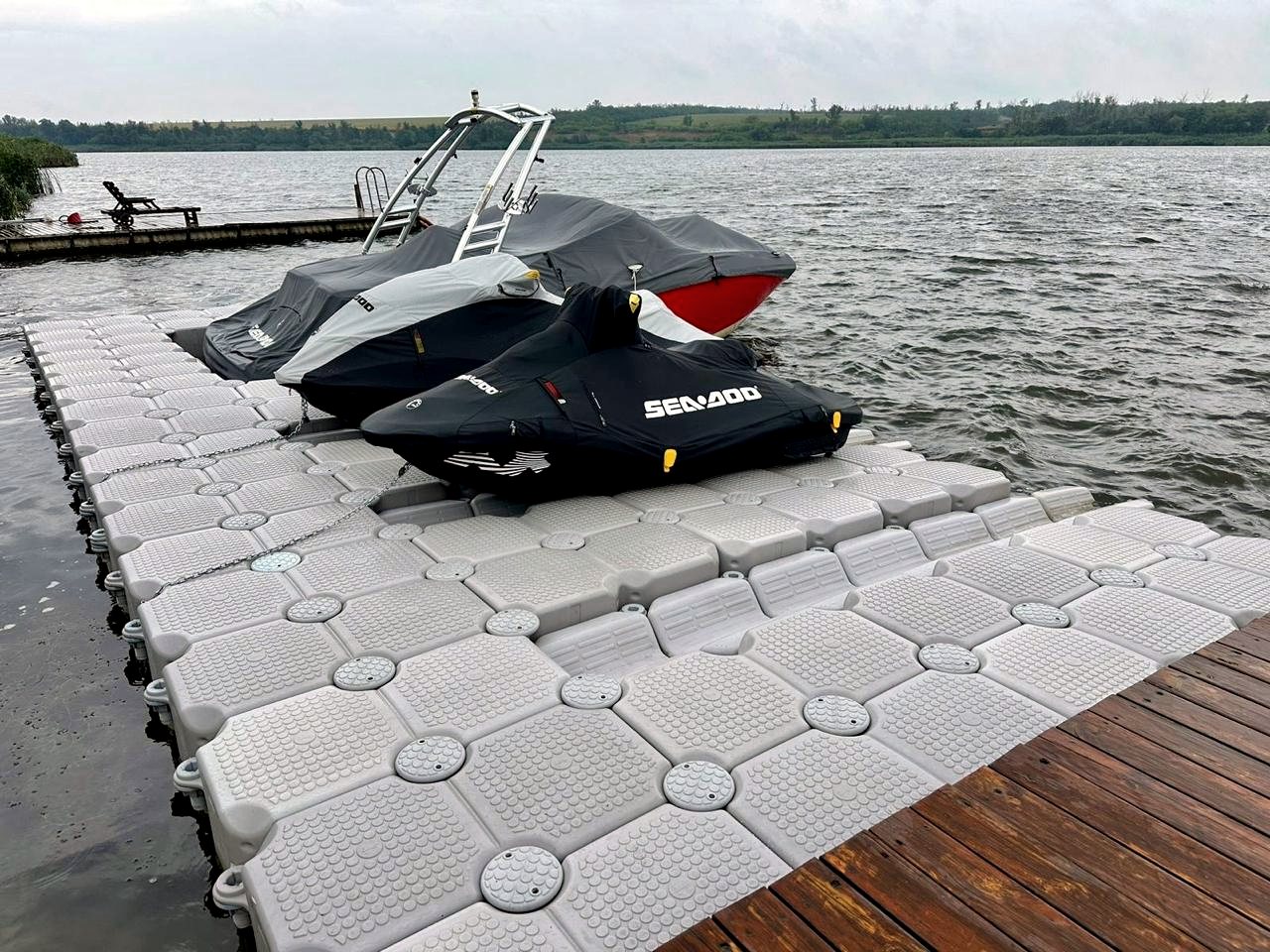
Boat Dock
Moorage and boarding for runabouts and cruisers.
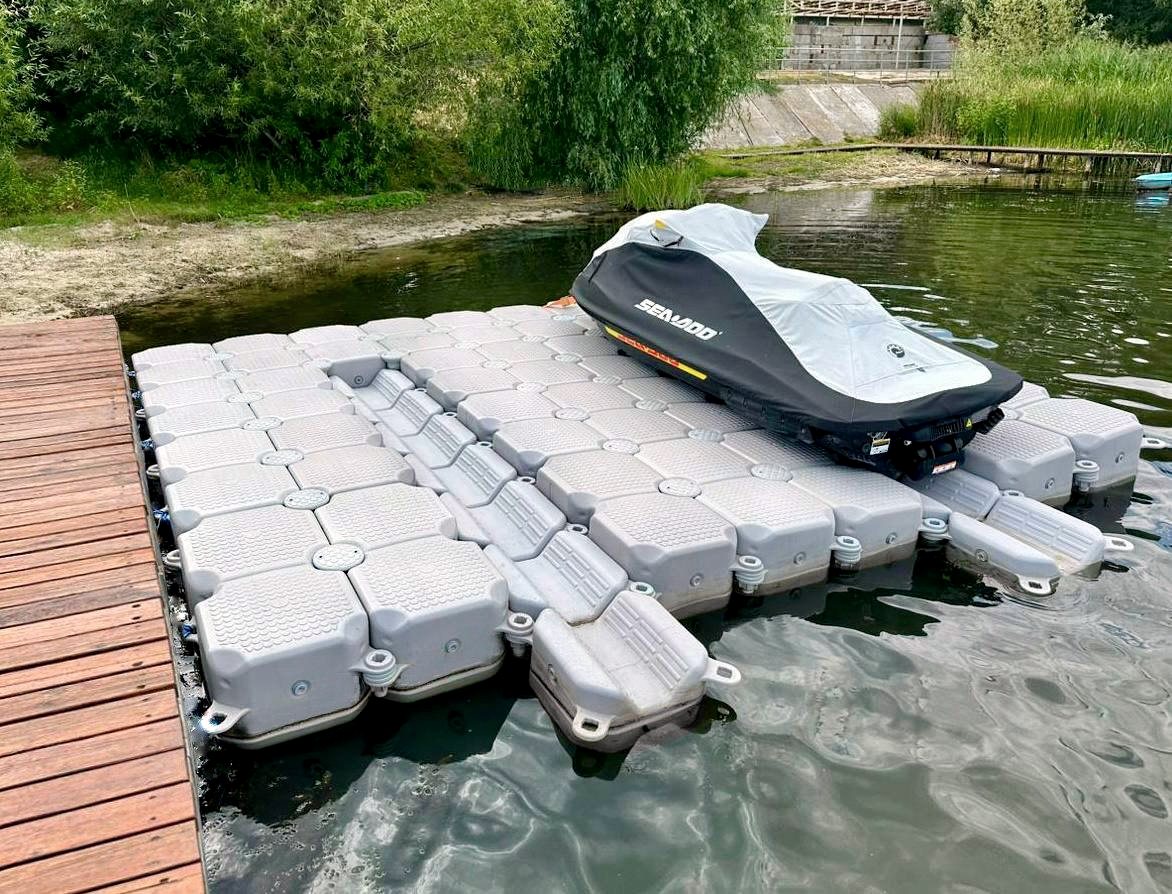
PWC Platform
Drive-on parking for jet skis and personal watercraft.
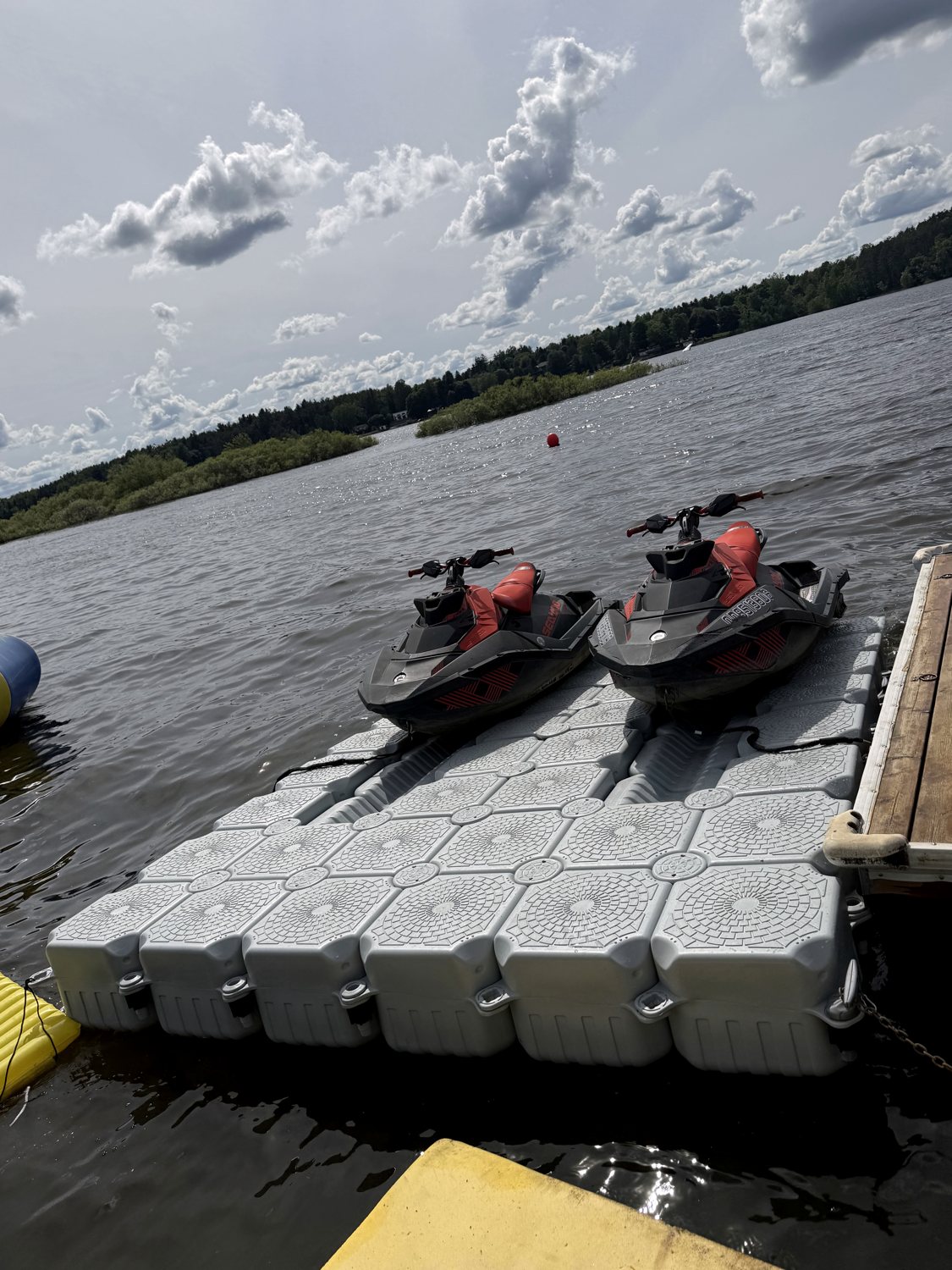
Swim Platform
Stable open deck for swimming and lounging.
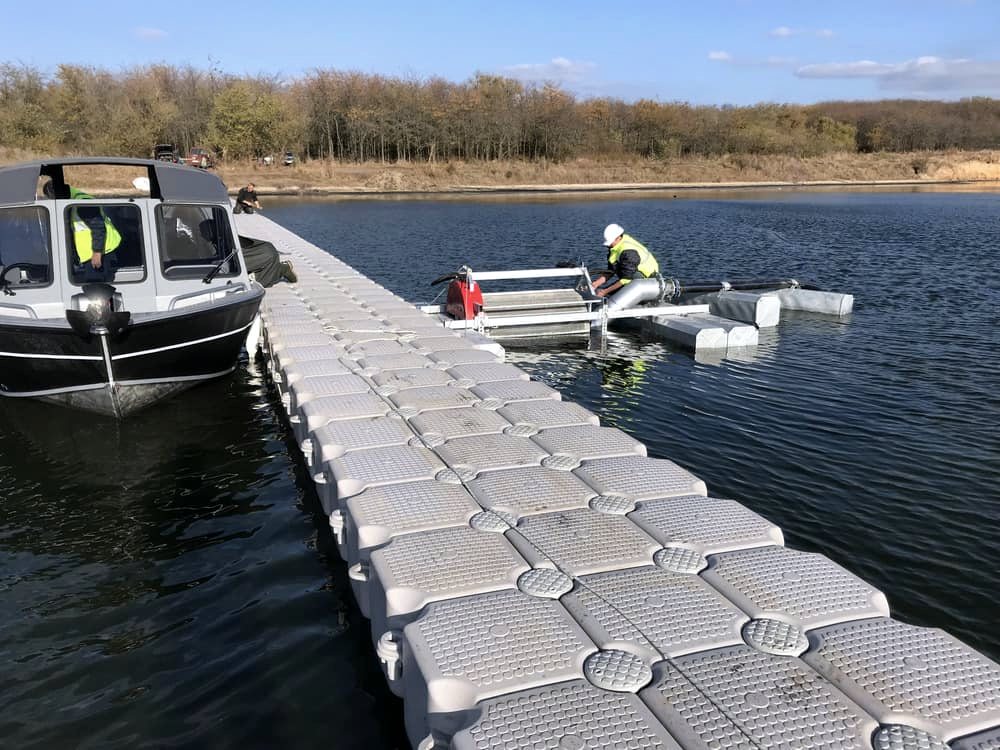
Marina Walkway
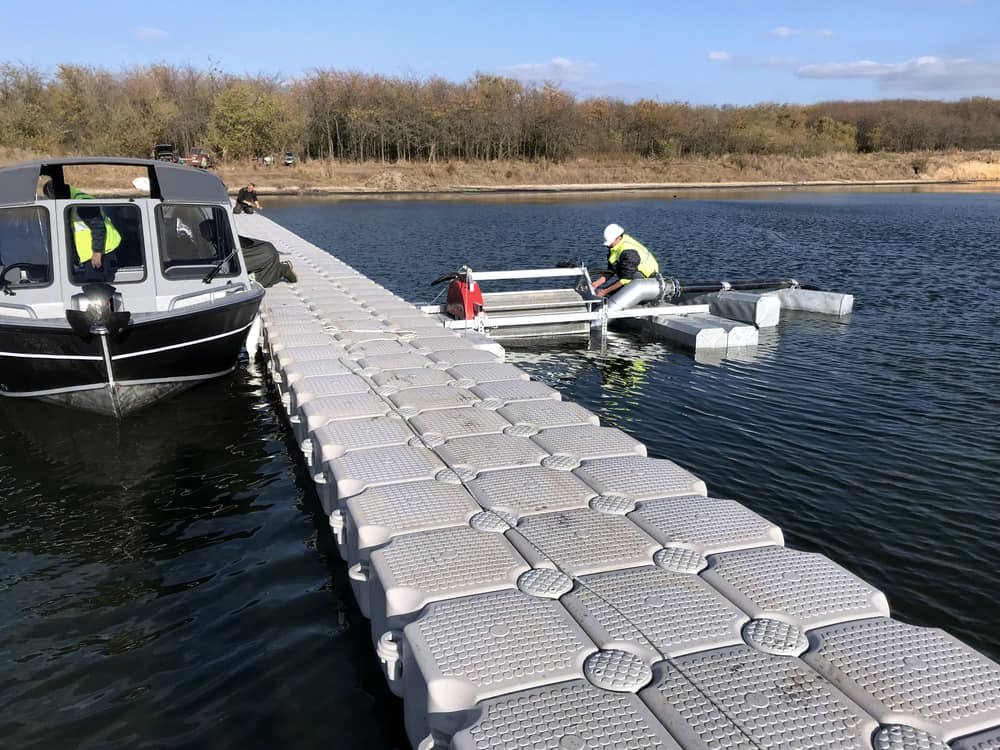
Connective walkways and finger piers for berths.
Work Platform
Load-bearing platforms for equipment and access.
See it on
your own water.
Find your lake on the satellite, drop a dock and shape it — drawn to real scale. Play right here, or open it full-screen when you want room.
See The Actual
Product.
The module, in numbers
[ GR-20 · HDPE · MOD-500 ]Private Waterfronts.
Commercial-Scale Systems.
Private
Commercial
A Dock Should Adapt.
Not Become A Constraint.
Compared: wood · welded metal · generic modular · fixed install · service life indicative, by material
Expand
Add sections without replacing the existing system.
Reconfigure
Change the dock shape when the shoreline or use changes.
Relocate
Disassemble and move the structure to another location.
Repair Selectively
Replace individual modules instead of rebuilding.
Three Ways
To Work With Us.
You already have the lake and the customers. Pick the arrangement that fits how you work — refer the job, hold stock, or collect and install it yourself.
Send Us The Job
You bring the customer. We quote, deliver and install, and you take a commission on every dock that lands.
Hold Stock On Your Yard
Wholesale modules sit on your territory. You sell them, you install them, you keep the margin.
Collect And Install
Order per job, collect it from our warehouse and install it yourself at dealer pricing.
[ ONTARIO TERRITORIES · COMMISSION AND WHOLESALE TERMS AGREED PER DEALER ]
Priced By The System.
Not By A Vague Promise.
Swim Platform
5 × 5 modules — a free-floating deck to swim and lounge from.
Cottage Dock
2 × 9 modules — the straight walk-out most people start with.
Family Dock
2 × 9 walk-out plus a 6 × 6 deck — sit, board and swim from one dock.
Jet-Ski Port
3 × 6 modules — drive-on port for a PWC. Our most-ordered build.
Commercial
Repeatable sections for marinas, clubs, resorts and municipal waterfronts.
Prices work out at roughly $30 per square foot of deck and include delivery and assembly on your shoreline. Taxes are extra. Your exact number comes in the written estimate and depends on dimensions, configuration, accessories and delivery location.
From Shoreline To System.
Delivery
Site Plan
Install
Seasonal
Tell Us About
Your Shoreline.
We price every dock properly rather than guessing from a slider — water depth, bottom type, exposure and how you reach the shore all change the number. Send what you know; we reply with a written estimate within one business day. No obligation, no deposit.
[ RATHER TALK? ]
Request Received
Thanks — we'll review your shoreline and come back with a written estimate within one business day.
The Questions
We Actually Get.
The modules are moulded overseas, and we're not going to pretend otherwise — most docks sold in Canada use imported components. What matters is what's specified and who answers for it.
Ours are virgin HDPE with an 8–10 mm wall, sealed and blow-moulded with no foam core, rated 270 kg/m² and −30 to +60 °C, with UV-stabilised material and stainless hardware. The warranty is 10 years and it is honoured by a registered Canadian company. If something fails, you call us, not a factory.
On a lake with no strong current and no spring ice run, the dock can stay in the water over the winter, unloaded. HDPE doesn't bond to ice — as the surface freezes, the dock is usually pushed up on top of it.
On a river, or anywhere you get a spring ice run, take it out. Moving ice damages any structure. A module weighs 7 kg, so the dock comes apart by hand — that is the whole reason the system is built this way.
On a large flat dock, yes — and we won't try to win that on price.
What you get here instead: no rot and no repainting, a layout you can change or extend years later, single-module replacement, and a crew that installs it and lifts the dock out in October. A flat-pack kit does none of that.
A typical cottage dock goes in inside a day once we're on site. A jet-ski port is usually half a day. Marina runs are quoted by section.
The honest constraint is the calendar, not the work: spring is the bottleneck, because everyone wants their dock in for the May long weekend. Booking in winter is how you get the date you want.
The modules float in very little water — the system draws roughly 8 inches (20 cm) unloaded. What actually decides the layout is the bottom: rock, sand or muck changes how the dock sits and how we lay it out.
That's why we ask for a photo of your water's edge instead of guessing. It answers most of this in one look.
Yes — that's the main reason to buy modular. Every module is the same part with the same footprint, so a section added in three years connects to what you have now.
People commonly start with a dock and add a jet-ski port the following season.
The top face is moulded with a non-slip texture and the edges are rounded, with no sharp metal on the walking surface.
It stays grippy wet — that texture is the whole reason the top of the module looks the way it does.
Effectively none. HDPE doesn't rot, corrode, delaminate or need painting, and it isn't bothered by mould or insects. Wash it with a hose or a pressure washer.
If a single module is ever damaged, it swaps out in minutes without dismantling the dock.
The written estimate is free and carries no deposit.
Terms are set out in the estimate itself before anything is ordered — you'll never be asked to pay for a number.
We use cookies to measure our advertising and improve this site. You can accept or decline analytics/marketing cookies — essential cookies only if you decline. See our Privacy Policy.
Thanks — noted against . We'll action it.